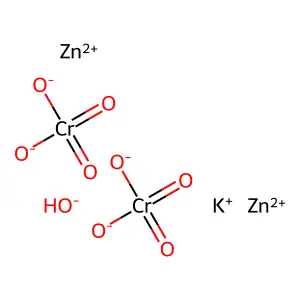
Zinc potassium chromate
TL;DR: Zinc potassium chromate (CAS 11103-86-9) is a chemical compound with molecular formula Cr2HKO9Zn2 and molecular weight 415.67 g/mol, supplied by Kehong Biological (Henan Kehong Biological Technology Co., Ltd.) with CRO/CDMO custom synthesis services.
potassium;dizinc;bis(dioxido(dioxo)chromium);hydroxide
Also Known As: ZINC POTASSIUM CHROMATE, Zinc yellow, Citron yellow, Potassium zinc chromate, ZINC CHROMATE
| Molecular Formula | Cr2HKO9Zn2 |
|---|---|
| Molecular Weight | 415.67 g/mol |
| LogP | -8.41 |
| Topological Polar Surface Area | 162.0 Ų |
| Hydrogen Bond Donors | 1 |
| Hydrogen Bond Acceptors | 9 |
| Rotatable Bonds | 0 |
| Exact Mass | 417.66196 |
| Heavy Atoms | 14 |
| Complexity | 62.0 |
| Melting Point | Decomposes at about 500 °C |
| Density | 3.40 to 3.60 |
| Solubility | less than 1 mg/mL at 68 °F (NTP, 1992) |
Chemical Identifiers
| CAS Number | 11103-86-9 |
|---|---|
| SMILES | [OH-].[O-][Cr](=O)(=O)[O-].[O-][Cr](=O)(=O)[O-].[K+].[Zn+2].[Zn+2] |
| InChIKey | GQKCRUJOPUHISR-UHFFFAOYSA-M |
Product Overview
Zinc potassium chromate (CAS 11103-86-9), with molecular formula Cr2HKO9Zn2 and molecular weight 415.67 g/mol. IUPAC: potassium;dizinc;bis(dioxido(dioxo)chromium);hydroxide.
Chemical Property Profile of Zinc potassium chromate
Property Insights of Zinc potassium chromate
The XLogP value of -8.41 indicates that Zinc potassium chromate is hydrophilic (water-soluble), making it suitable for aqueous formulations and biological assay applications. The TPSA of 162.0 Ų indicates high polarity, suggesting Zinc potassium chromate may have limited membrane permeability but good aqueous solubility. Following Lipinski's Rule of Five, Zinc potassium chromate has 1 hydrogen bond donor(s) and 9 hydrogen bond acceptor(s), all within the drug-like range, suggesting favorable oral bioavailability potential.
Frequently Asked Questions
Frequently Asked Questions
What is the CAS number of Zinc potassium chromate?
The CAS number of Zinc potassium chromate is 11103-86-9.
What is the molecular formula of Zinc potassium chromate?
The molecular formula of Zinc potassium chromate is Cr2HKO9Zn2.
What is the molecular weight of Zinc potassium chromate?
The molecular weight of Zinc potassium chromate is 415.67 g/mol.
Where can I buy Zinc potassium chromate?
You can request a quote for Zinc potassium chromate directly from KEHONG BIO. Contact us or email info@kehongbio.com for pricing and availability.
Does KEHONG BIO offer custom synthesis for Zinc potassium chromate?
Yes, KEHONG BIO provides custom synthesis services for Zinc potassium chromate and related compounds. Contact us with your specific requirements including quantity, purity, and timeline.